
Knee Surgery in Guadalajara
Orthopedic Traumatologist in Guadalajara


Top-Rated Service 2025
5.0 ★★★★★

775 Reviews
99%
Patients Satisfied with My Treatments ★★★★★






Knee Surgery
Knee Injuries
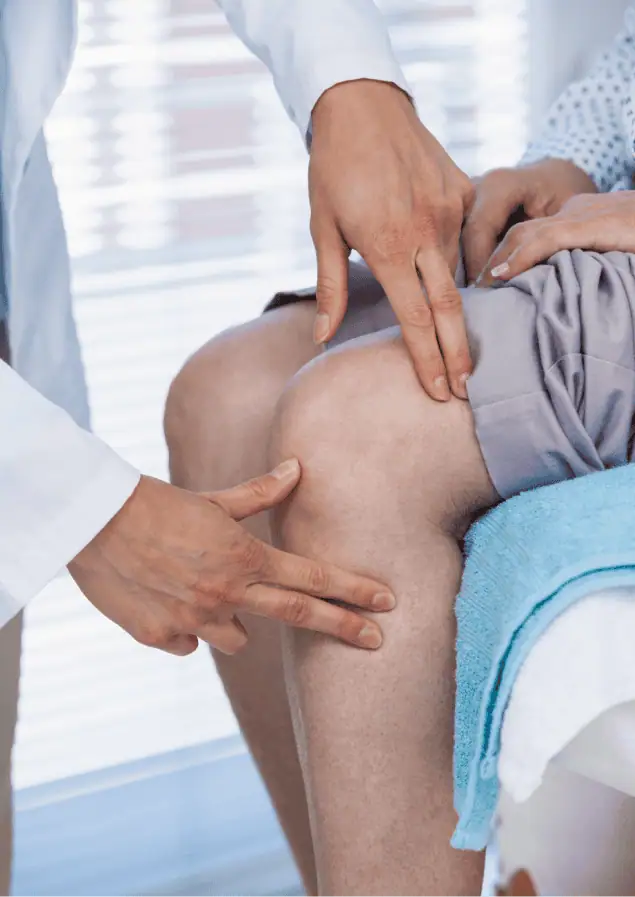
Most Common Knee Injuries
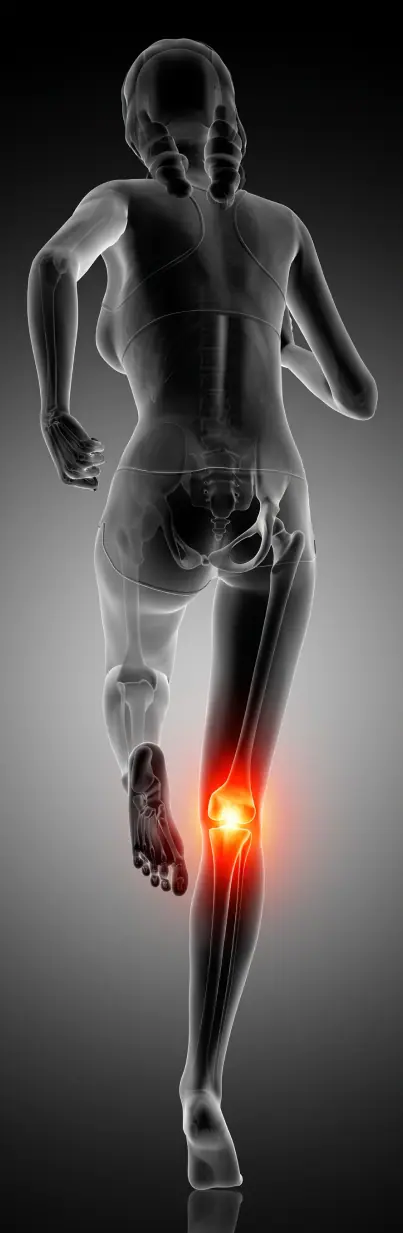
Frequently Asked Questions
Knee pain is one of the most common reasons for orthopedic consultations. It does not always mean joint degeneration. Age, the location of the pain, and whether there has been an injury are key factors in identifying the cause.
Most common causes according to age
After age 50
If you experience pain when walking and morning stiffness lasting less than 30 minutes, the most common cause is knee osteoarthritis. It may also be accompanied by crepitus or a popping sensation.
Between 40 and 50 years old
Pain in the front of the knee that worsens when climbing stairs or after sitting for a long time may suggest patellofemoral syndrome.
Inner or outer knee pain with locking
If it occurs after a twist or sudden movement, it may be a meniscus injury.
When is it urgent?
Seek immediate medical attention if you experience:
- Fever
- Significant swelling
- Inability to bear weight on the leg
- Sudden knee locking
Do I need an MRI?
Not always. In many cases, a thorough physical examination can guide the diagnosis with a high degree of accuracy.
If you live in Guadalajara or Zapopan and have persistent knee pain, a specialized evaluation can help identify the exact cause and prevent complications.
If you have experienced knee pain after physical activity, a long trip, or another everyday activity, you have probably wondered about its cause. Knee problems become increasingly common as we age.
Although knee pain is very common in adults, even without a diagnosed condition requiring treatment, there can be many causes, including sports injuries, overtraining, sprains, meniscus injuries, ligament injuries, cartilage damage, tumors, and synovitis. However, statistically, the most common cause of knee pain worldwide is knee osteoarthritis. It is the most common site of osteoarthritis and accounts for a significant proportion of the global burden of the disease.
If you have knee pain when walking or going up and down stairs, hear popping or cracking sounds in your knees, or experience swelling, you have probably considered seeing a doctor. The next logical question is: who should you see?
Knee pain is one of the most common reasons for medical consultations in adults over 40. Knowing which specialist should evaluate you first can help avoid unnecessary tests, delays in diagnosis, unnecessary expenses, inappropriate management, and ineffective treatments.
Who should evaluate knee pain first?
The healthcare professionals who commonly provide the initial evaluation include:
- Primary care physician
- Family physician
- Internal medicine physician
- Orthopedic surgeon
They may perform:
- A complete medical history
- A detailed physical examination
- Initial X-rays when necessary
- Assessment of warning signs
- Referral to a specialist based on their findings
In patients over 45–50 with suspected knee osteoarthritis, primary care often leads a stepwise treatment approach and coordinates referral if conservative treatment fails. However, as a general rule, an orthopedic surgeon and traumatologist, especially one specializing in the knee, should evaluate persistent knee pain.
You should be concerned about knee pain if it is accompanied by fever, severe inflammation, inability to bear weight on the leg, rapid swelling after an injury, or loss of sensation. These may be signs of infection, hemarthrosis, or a serious injury and require urgent evaluation by a knee specialist in Guadalajara.
Knee pain can also occur under normal circumstances, especially after physical exertion or activities beyond your usual level, such as long walking trips, starting a new sport, or increasing or changing the type or volume of physical activity.
However, persistent knee pain combined with other warning signs is important to recognize. Red flags that may indicate a potentially serious condition include signs of infection, bleeding inside the joint, vascular or neurological injury, or significant structural damage.
The short answer is YES. Knee pain that develops gradually or progressively, worsens with activity and improves with rest, and is accompanied by brief morning stiffness (≤30 minutes) and mild swelling is typical of knee osteoarthritis. Knee pain when walking or climbing stairs may also be a sign of osteoarthritis. Learn about the key symptoms, risk factors, and when to seek evaluation from a knee specialist.
In people over 45–50, pain with weight-bearing activities such as walking, climbing stairs, or getting up from a chair, combined with brief stiffness when starting to move, makes knee cartilage degeneration more likely.
What is knee osteoarthritis or gonarthrosis?
Knee osteoarthritis is the degeneration of cartilage and internal joint structures, including the menisci and ligaments, associated with chronic inflammatory and degenerative processes. Knee osteoarthritis is the most common location of osteoarthritis worldwide and is a major cause of pain and disability.
- In people over 60, symptomatic knee osteoarthritis affects approximately 10–13% of the population, rising to around 40% in those over 70.
- Globally, prevalence among people aged 40 and older is approximately 22.6%.
- It is more common in women.
- Risk increases with excess weight, previous meniscus or ligament injuries, and repetitive joint overload.
A meniscus injury in the knee often occurs after a sudden twist or trauma and may cause pain along the joint line, clicking, locking, or swelling. Clinical tests such as the McMurray and Thessaly tests can help identify a suspected injury, while an MRI can confirm the diagnosis with a high degree of accuracy. An early diagnosis helps determine whether treatment should involve rehabilitation, conservative management, or knee arthroscopy.
A meniscus injury is one of the most common causes of knee pain after twisting, pivoting, or sports activity. Symptoms that increase the likelihood of a meniscal tear include joint-line pain, clicking, knee locking, swelling, and pain when squatting or rotating the knee.
An MRI can confirm the diagnosis with a high degree of accuracy, while knee arthroscopy is considered the reference standard for directly visualizing the meniscus and treating the injury when necessary.
Key symptoms and signs of a meniscus injury
- Pain along the knee joint line, accompanied by a sensation of locking or giving way when turning or pivoting.
- Joint locking and a positive McMurray test significantly increase suspicion of a meniscal tear.
- A feeling of fullness or swelling along the joint line may also be a clinical sign of a meniscus injury.
A torn meniscus is one of the most common knee injuries seen in clinical practice. It can occur in active individuals as well as patients with joint degeneration. Symptoms commonly include localized pain along the joint line, clicking, locking, or a sensation of the knee catching when moving, especially after a sudden twist or during sports that involve changes in direction. In more advanced injuries, symptoms may even occur when simply turning a corner while walking.
Recognizing these signs early allows for timely diagnosis and treatment of a meniscal injury, helping prevent the damage from progressing or leading to more serious joint problems.
A meniscus tear typically causes localized pain along the knee joint line, accompanied by clicking or a sensation of locking, which is one of the most characteristic symptoms. This type of injury often occurs after a twisting or pivoting movement, which is common in sports such as soccer, padel, and basketball.
Pain may appear immediately after the injury, although in some cases swelling develops progressively over 12–24 hours.
Non-Surgical Treatments for Knee
Hyaluronic Acid for Knee Osteoarthritis Without Surgery
- Cartilage injuries.
- Ligament injuries.
- Meniscus degeneration.
- Meniscus injuries.
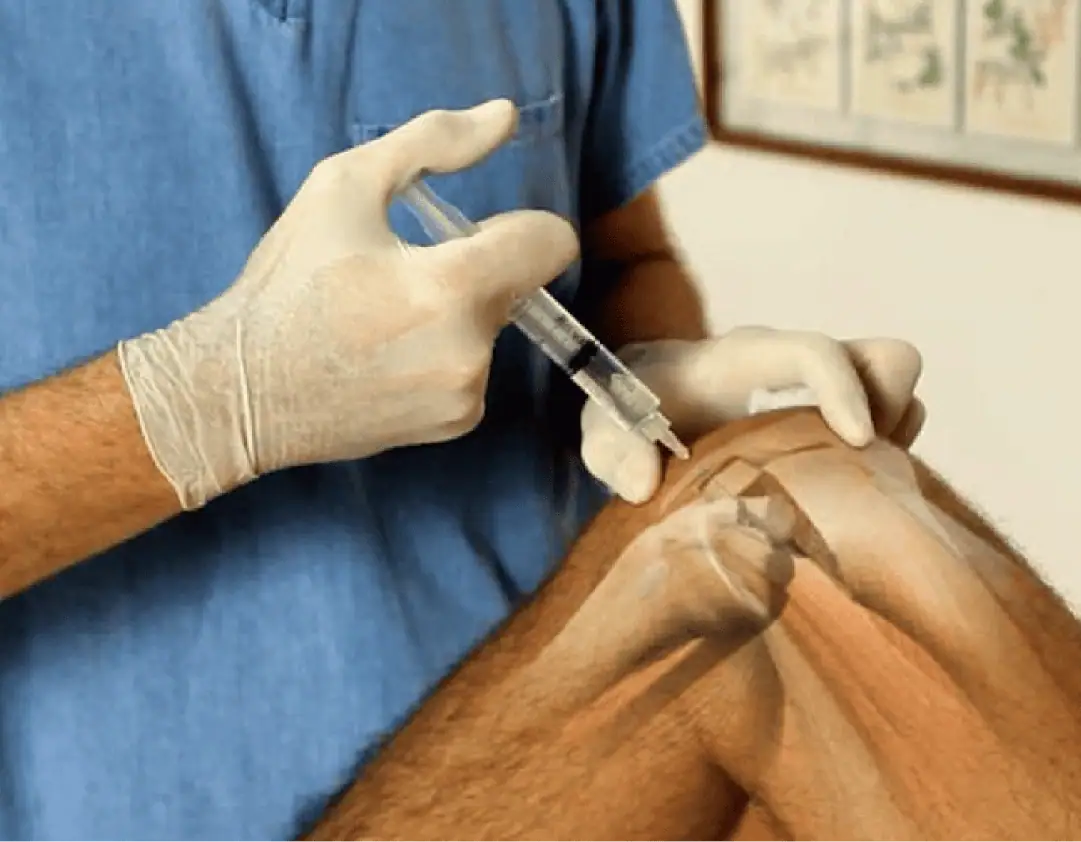
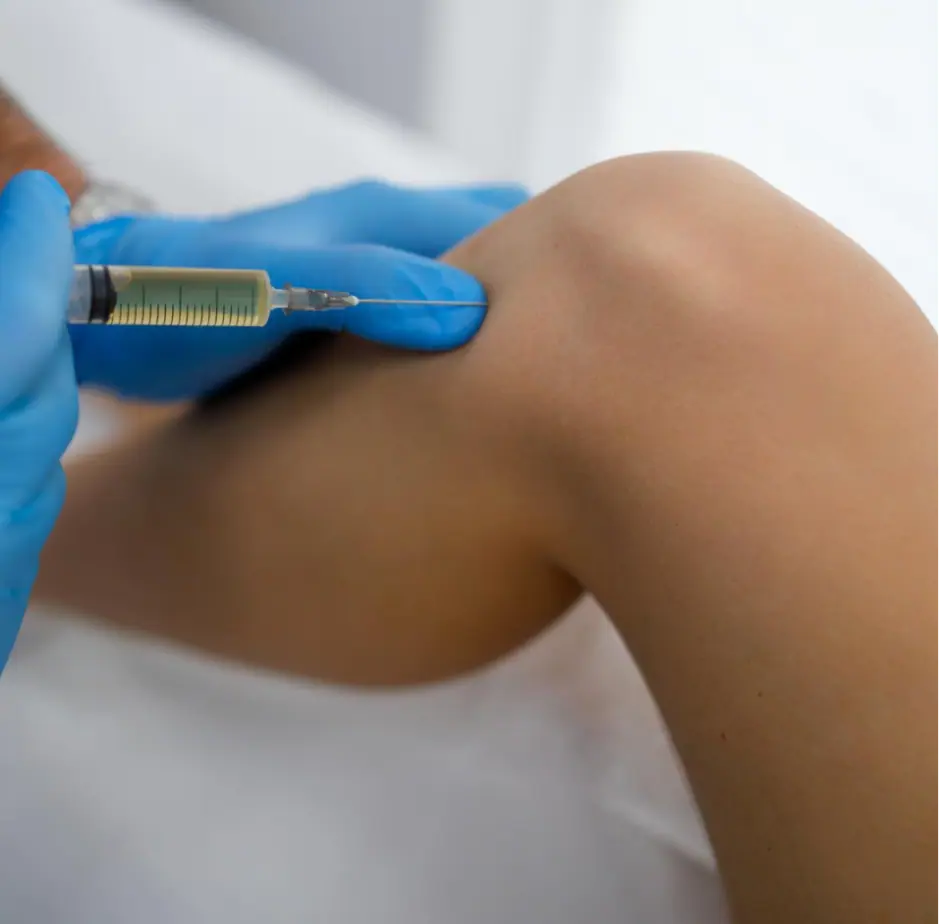
Most Common Questions About Knee Surgery
A knee prosthesis is a biomedical engineering product that replaces the articular surfaces of the patient's natural knee (or any other joint in the respective cases) when they show wear that causes pain, deformity, or affects their function. Contrary to what most people may think, only the SURFACE of the joint is replaced, something like rebuilding the "shell" where movement occurs between the three bones that make it up, and not the entire segment of the knee as if it were a "block".
The indication for TAR (Total Knee Arthroplasty or Knee Prosthesis) is based on pain, marked functional impotence, and radiological signs of severe joint injury in a relatively sedentary patient, which cannot be controlled with alternative treatments. (oral and injected medications, infiltration into the knee of medications, rehabilitation and physical therapy, etc.).
To establish the indication, it is necessary to integrate multiple variables such as age, associated pathologies (diabetes mellitus, arterial hypertension, kidney diseases, etc.), functional demands (whether the patient is very active or not in his daily life), attitude psychological and technical considerations. It is also important to identify patients at risk of failure (smokers or poor adherence to medical treatment).
Complications range from 5 to 8% of all knee prostheses surgeries, which means that the rest (95 to 92%) of patients have good to excellent results, regardless of the technique or other factors to consider ( weight, previous diseases, surgical skill, type of implant, among others). The most common complications can be:
- Infection, which is the most common of all complications and covers a spectrum as broad as superficial skin infections to osteomyitis (bone infection).
- Thrombosis (obstruction by a blood clot of the venous flow).
- Embolism around 1% (a blood clot breaks off to travel in the venous system and cause blood obstruction problems in another organ or system such as the lungs, brain or digestive system).
- Infections (both in the skin or deeper, including the ligament graft).
- Allergic reactions to medications (since if you've never had surgery, the medications being applied are new to your system.
- Failure or loosening of implants: especially if an adequate rehabilitation program is not followed in the postoperative period, weight loss, etc.
Unicompartmental knee prosthesis: It is a very special type of prosthesis in which only a part of the knee is replaced and not its entirety, due to overload and wear in a single region (usually the internal region), the patient must be very well selected and the surgeon who performs the procedure must have experience in it, since this technique is much less tolerant of failures compared to the traditional total prosthesis.
Patelo Femoral resurfacing knee prosthesis:This is a prosthesis that treats wear exclusively in the Patelo-femoral region of the knee (front area), so the patient, by definition, will only be a candidate for it if the wear presented is solely and exclusively in the region of said area of the knee. The technique is very demanding in terms of the orientation and depth of the bone cuts, so its placement is indicated only by surgeons with great skill and experience in this technique.
Tumor knee prosthesis: These are the group of prostheses that are indicated for patients with large bone defects, either due to wear with a marked angulation or fractures or tumors that destroy a large part of the bone tissue of the knee. They are modular systems (interchangeable) that allow a great diversity of measures and components, therefore they solve cases in which previously no solution would be considered.
The materials with which the knee prosthesis are designed must meet certain standards to achieve the following objectives:
- Avoid rejection of the organism: Friendly materials that avoid the normal immune response of the organism.
- Allow the load to repeated and sustained cycles: Thereby tolerating the load, weight and march of the individual through the years.
- Be economically sustainable over time: That its durability, design and application are feasible for the application of the population throughout the planet.
These materials are usually chromium, cobalt, molyubdenum alloys; The insert that goes between both metal parts is a polymer (plastic) which interlocks under radiation and provides a very high resistance to cycles of use. There are other materials such as Titanium, Zirconium Oxide (Oxinium), among others, which have indications in young patients or those allergic to the components of the usual prostheses.
Normally, they are surgeries that, being elective (the day, time and place to carry out the surgery is chosen between the patient and the treating physician) hours before the surgical procedure for preparation at the assigned hospital and after knee prosthesis surgery, stay at least 1 night in the hospital, normally 2 nights and 3 days (from arrival to discharge home).
It is essential to understand that, unlike what is widely dispersed within the collective imagination, there is no absolute rest after knee prosthesis surgery. For example, once the surgery is carried out, that day is rested, but the next day the dressings are changed, the suction drain is removed, the patient is seated, stands and walks with the help of a walker.
The patient is only slower and slightly dependent on the care of family members or professional caregivers for a maximum of 2 to 3 weeks, a fact such that in the same period of time, the patient goes to his post-operative check-up in the office walking with a walker on his own. foot. The patient manages to become independent of the walker, cane or crutches in about 4 to 6 weeks, during which time he performs muscle strengthening of his extremities and is retrained to walk.
One of the most frequent questions in consultation prior to knee prosthesis surgery is this. The answer is always yes. You are not going to recover from surgery where function, strength, stability and gait were normal and were interrupted by a procedure, but rather, you are going to recover from a disease that wore out your joint for many years and little little by little it incapacitated him until surgery was chosen for its management.
Rehabilitation begins the day after your surgery, with the understanding that rehabilitating is not the same as going to a place where someone else does things for you, but muscles are recruited for simple but extremely important movements to avoid losing muscle mass. and later, re-educate the gait, recover strength, stability and proprioception respectively.
knee prosthesis. You must follow your doctor's instructions to the letter, among the most important we can point out that:
- It is essential to continue with an eating plan that allows you to reach and stay as close as possible to your ideal weight. Remember that weight is the most important modifiable factor in patient survival and satisfaction after knee replacement.
- Avoid smoking: tobacco (and therefore nicotine) is the substance most associated with failure in wound repair and surgical procedures of any medical specialty.
- Carry out rehabilitation in a timely manner as indicated by your specialist doctor, periodic check-ups as well as x-ray controls by your treating physician.
Post-surgery appointments are usually carried out according to this scheme:
- Appointment 15 days after your surgery: probably all or part of the staples or patches will be removed from your surgical wound.
- At 4 weeks: The remaining staples or sutures will be removed if they are still present, the compression stockings or bandage will be removed, they will be sent to Physical Rehabilitation
- 2 months: Rehabilitation progress will be assessed, by which time you have to use at most a cane (depending on the case) to walk and you will be able to be self-sufficient for 100
- your daily needs at home.
- 4 months: At this point the rehabilitation has been completed and occasionally there may be discomfort in the knee opposite to the one operated on (remember that in almost 99% of patients the wear is on both knees albeit to different degrees).
- 6 months: At this time the patient is close to 100% of his recovery and has reintegrated without pain, with full mobility and proper functioning, as he did not have for many years before surgery of his knee. It is time for your postoperative discharge.
The best tips to have a good knee prosthesis surgery and a good result are:
- You should be seen by a doctor who inspires you confidence and security.
- It is good to discuss with your doctor each and every one of the ailments of the last 5 to 10 years that have occurred in your body, although you may consider them minimal, they can acquire medical importance.
- Avoid smoking or taking medications not prescribed or authorized by your specialist doctor.
- Avoid heavy digestion foods 10 to 7 days prior to your surgery.
- Avoid looking for opinions from people who are not specialists in the subject, instead, go to more evaluations.
- Never enter without being convinced of your surgery, it is your body and absolutely no one but you can know what is happening or take responsibility for your decisions.
- Be patient, we don't all recover at the same time, in the end, the goal is the same for everyone, but the path is different for each person.
- Always bring any concerns or concerns to the attention of your doctor either before or after your procedure.
Normally there are several factors to consider when we talk about prices in knee prosthesis surgeries, among which are:
Hospital: Large hospitals cost more (much more) than small or medium-sized hospitals.
Type of prosthesis: There are state-of-the-art prostheses, which are more expensive, but offer important advantages.
In general, an EXCELLENT prosthesis in a very good hospital costs around 100,000 pesos (partnered hospitals) including, hospital, prosthesis, medicines during your hospital stay, healing material, anesthetics, fees of a medical team (surgeon, assistants, instrumentalist, circulator, anesthesiologist).
You can have more detailed information in consultation. We're at your service.