
Hip Surgery in Guadalajara
Orthopedic Traumatologist in Guadalajara

My priority is to restore mobility and quality of life to my patients through evidence-based treatments and state-of-the-art technology.

Top-Rated Service 2025
5.0 ★★★★★

775 Reviews
99%
Patients Satisfied with My Treatments ★★★★★

Hip Surgery
The most advanced techniques worldwide to provide comprehensive solutions for your hip condition.

Hip Injury Treatment
The best treatments for a faster and more effective recovery.

Hip Physical Therapy
Highly precise rehabilitation for specific hip conditions.

Medical Evaluation & Hip Imaging
Physical evaluation and advanced imaging studies (MRI, CT scans, X-rays) at the best price.

Hospital Care & Emergencies
Fast medical attention for problems that cannot wait.
Hip Replacement & Orthopedic Implants
The most advanced hip replacement technologies available worldwide for your specific needs.
Hip Surgery
Hip is a weight-bearing joint that, in addition to providing movement, allows us to remain upright. It is frequently affected by trauma (in both young people and adults), as well as cartilage wear. It has a complex system of ligaments, muscles, and tendons that make its function possible.
Hip Injuries
Today, hip injuries can be successfully treated in patients of all ages, allowing them to return to their daily activities. A wide range of treatment options is available, including surgery (joint replacement, arthroscopic surgery, fracture repair, physical therapy, cartilage preservation, and ligament reconstruction).
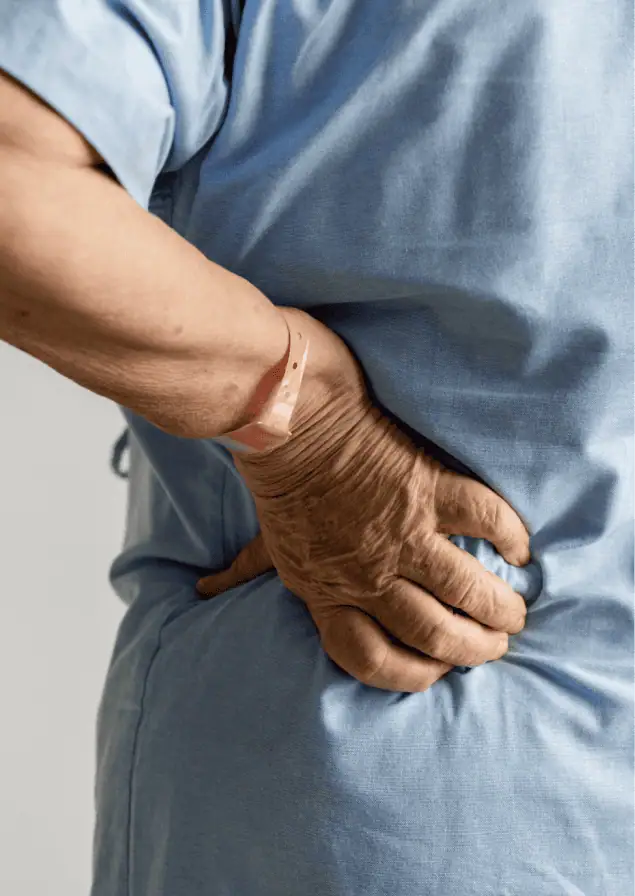
Most Common Hip Conditions
⬤ Osteoarthritis
It occurs due to wear and tear of the hip cartilage, becoming a degenerative condition. In addition to age and sex, other factors such as overuse, obesity, trauma, and lack of physical activity can contribute to its development.
⬤ Bursitis
As in other joints, the hip has a fluid-filled sac called a bursa, which helps cushion friction between bones and tendons. When this sac becomes inflamed, it causes bursitis.
⬤ Fractures
Although the hip is a very stable joint that allows a wide range of movement, a very strong impact can cause a hip fracture.
⬤ Dislocations
A dislocation occurs when the bones that normally fit together within a joint become displaced from their normal position. This is also known as joint dislocation.
⬤ Necrosis
This occurs when the bone does not receive an adequate blood supply, causing bone tissue to die. When this happens, the bone may begin to deform and flatten, resulting in persistent pain that may require surgery.
⬤ Rheumatism
This condition occurs when lubrication between the muscles and tendons is reduced, preventing them from gliding smoothly and causing friction. This can lead to deformity, inflammation, and pain.
⬤ Synovitis
Synovitis is inflammation of the soft tissues surrounding a joint, which can cause limping and limited mobility. It may be associated with trauma or genetic predisposition.
⬤ Gluteal Tendinitis
This is a degenerative and inflammatory condition affecting the muscles located in the gluteus medius or gluteus minimus. It is a common injury among athletes who participate in impact sports.
⬤ Trochanteritis
This condition is characterized by chronic pain located on the outer side of the hip, which may worsen when walking, lying on the affected side, or climbing stairs.
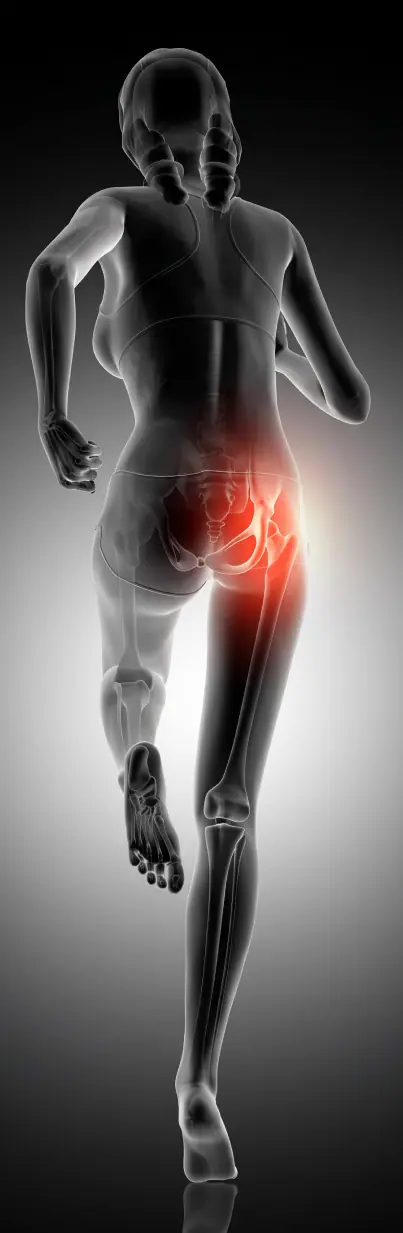
Non-Surgical Treatments for the Hip
Hyaluronic Acid for Non-Surgical Hip Osteoarthritis Treatment
Hyaluronic acid is a natural component of synovial fluid found in the joints. It provides lubrication, shock absorption, and nourishment to cartilage. In the hip, hyaluronic acid plays an important role in smooth, pain-free movement.
Hip joint wear and tear, also known as hip osteoarthritis, is a degenerative condition that affects the articular cartilage, causing pain, stiffness, and limited mobility.
- Cartilage injuries.
- Ligament injuries.
- Labral degeneration.
- Labral injuries.
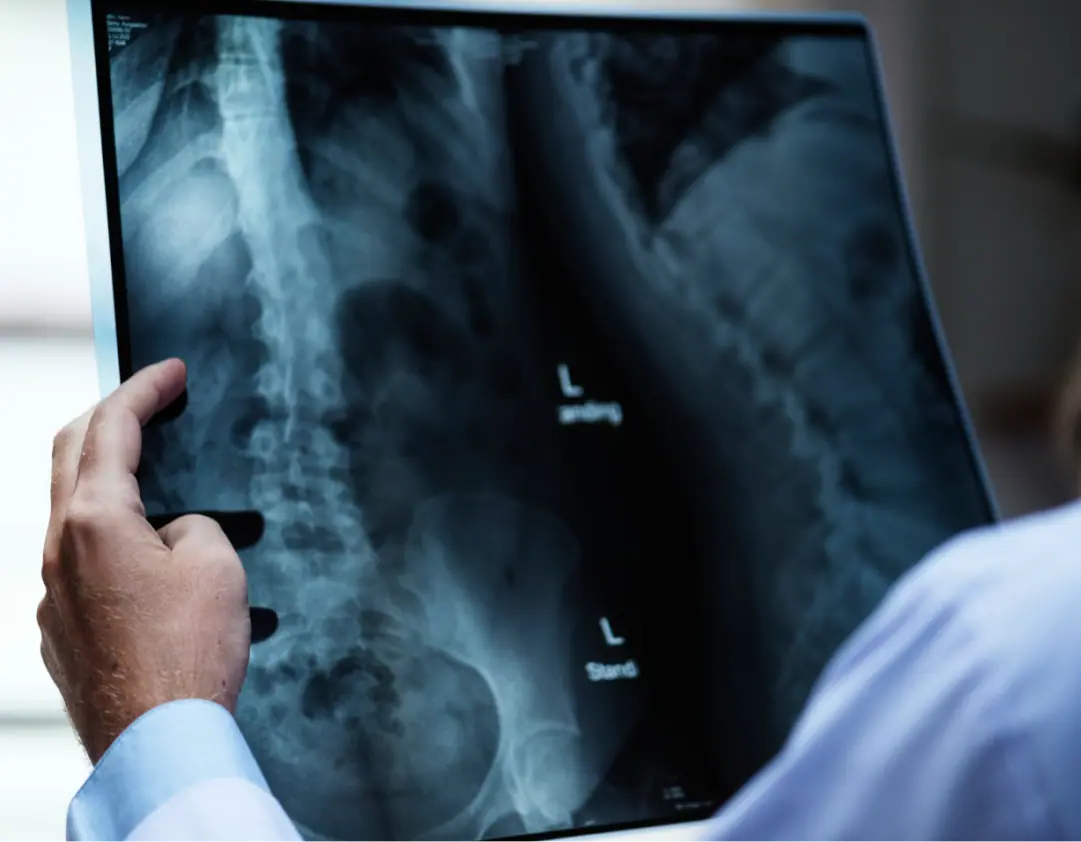
Stem Cells for Non-Surgical Hip Injuries or Osteoarthritis
Stem cells are processed and injected into the affected hip. The goal is for the stem cells to differentiate into healthy cartilage or other damaged tissues and promote repair and regeneration.
Platelet-Rich Plasma for Non-Surgical Hip Treatment
Also known as autologous growth factor therapy (AGFT), PRP is obtained by drawing a small amount of the patient's blood, processing it to concentrate the platelets, and then injecting the concentrated platelets into the affected area. Platelets release growth factors that may help stimulate tissue healing and regeneration.
Frequently asked questions about hip surgery
It is recommended that patients stay in bed for a short time after hip surgery, usually a few hours to a day.
After this, patients usually begin physiotherapy and mobilization exercises, although they are advised to avoid strenuous activity or heavy lifting for several weeks after the operation.
Like any surgery, hip surgery carries certain risks and complications.
Most people can begin to walk with the help of a walker or cane within the first 24 hours after hip surgery..
And most patients can walk without assistance in about 4 to 6 weeks after surgery, although this can also vary depending on the complexity of the surgery and the patient's ability to recover.
Below are some of the cares that a person who has undergone hip surgery should take into account:
- Limited motion: Your doctor may recommend that you limit the amount of movement in your hip while you recover from surgery. This may include avoiding excessive flexion, rotation, or extension of the hip for a set period of time.
- Medications: Your doctor may prescribe pain relievers to help control pain after surgery. You may also be prescribed anticoagulant medication to prevent blood clots.
- Rehabilitation: Rehabilitation is an important part of recovery after hip surgery. Your doctor or physical therapist will teach you strengthening and flexibility exercises that will help restore hip mobility and prevent stiffness.
- Rest: It is important to rest and avoid strenuous physical activity during the recovery period. However, it is important to stay active with light exercise to prevent stiffness and promote healing.
- Personal Hygiene: Following surgery, it is important to maintain good personal hygiene to prevent infection. Keeping the incision area clean and dry is essential to prevent infection.
- Balanced diet: Maintaining a balanced and healthy diet is important for healing and recovery after surgery. Be sure to eat foods rich in nutrients and vitamins to help your body heal faster.
- Avoid certain activities: Avoid activities that can put pressure on the hip, such as heavy lifting, sitting on low surfaces, or high-impact activities like running or jumping, until cleared by your doctor.
Most patients stay in the hospital 1 to 3 days after hip replacement surgery. However, some patients may require a longer hospital stay if they have medical complications or require more intensive rehabilitation before discharge.
Don't let hip pain limit your daily life
Orthopedic Trauma Specialist Near Me
5 locations in Guadalajara and Tijuana
to provide care at the location that works best for you
Tijuana, B.C.
HOSPITALES MAC TIJUANA Consultorio 21 y 22 Vía Rápida Ote 15000 Chapultepec Alamar 22110 Tijuana BC
Tel: +52 33 1025 9669